

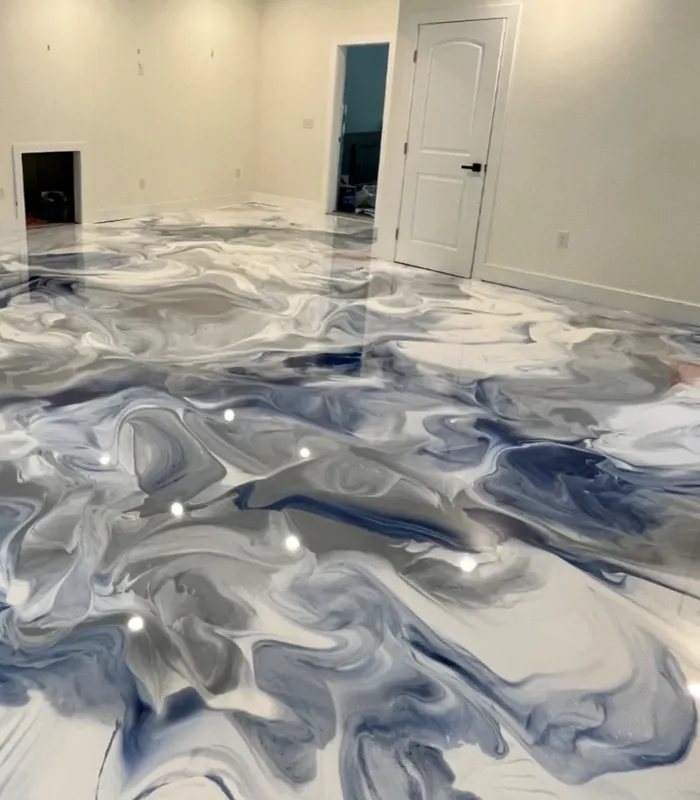
Walk into a contemporary home today, and you might just find yourself standing on what looks like a frozen river of color, a matte concrete dreamscape, or a floor embedded with delicate, shimmering flakes. That’s the magic—and the growing dominance—of resinous and seamless floor systems. Honestly, they’re moving from industrial warehouses and chic retail spaces right into our living rooms and kitchens. And for good reason.
Here’s the deal: modern homeowners are craving continuity, durability, and a certain kind of… visual peace. The endless grout lines of tile, the seams of vinyl plank, even the predictable patterns of hardwood can feel, well, busy. Seamless floors answer that call with a whisper, not a shout. Let’s dive into why these poured floors are becoming the quiet backbone of so many stylish, functional homes.
What Exactly Are We Talking About? Epoxy, Polyurethane, and More
First, a quick demystification. “Resinous” just means it’s a liquid-applied system that cures into a solid surface. Think of it like spreading a thick, sophisticated icing that hardens into a rock-solid shell. The main players are epoxy and polyurethane, and they each bring a different personality to the party.
| System Type | Key Characteristics | Best For in the Home |
| Epoxy Floors | Extremely durable, chemical-resistant, vast design options (chips, metallics, patterns). Can feel slightly harder underfoot. | Garages, basements, high-traffic kitchens, and statement-making living areas. |
| Polyurethane Floors | Softer, more flexible, excellent UV resistance (won’t yellow), and often more slip-resistant. Great thermal shock resistance. | Sunrooms, patios (yes, outdoors!), bathrooms, and kitchens where comfort underfoot is a priority. |
| Polyaspartic Hybrids | The speed demons. Cure incredibly fast, allowing for rapid installation. Combine durability with quick project turnaround. | Renovations with tight timelines, or when you need a floor done over a weekend. |
That’s the technical bit. But the real story isn’t in the chemistry—it’s in the experience.
The Irresistible Allure: Why Homeowners Are Making the Switch
The Holy Grail: Seamlessness and Visual Flow
This is the big one. A seamless floor creates an unbroken plane that makes spaces look larger, cleaner, and more expansive. It’s a minimalist’s dream. You get this beautiful, monolithic look that ties rooms together without visual interruption. In open-concept homes, which, let’s face it, are still hugely popular, this flow is everything. It’s like the floor becomes a canvas, and your furniture and life are the art on top of it.
Durability That Borders on Brutal (In a Good Way)
We’re talking about a surface that laughs at spills, scratches, and heavy foot traffic. Forget about worrying about red wine on the kitchen floor or dropped tools in the garage. These systems are non-porous, stain-resistant, and a breeze to clean—often just needing a damp mop. For families with kids and pets, that’s not just a luxury; it’s a sanity saver.
Endless Customization: Your Floor, Your Rules
This is where it gets fun. Want a deep, glossy charcoal that looks like wet stone? Done. A warm, matte terrazzo with recycled glass chips? Absolutely. A subtle, cosmic shimmer with metallic pigments? You got it. The design possibilities are virtually limitless:
- Color: Any hue you can imagine.
- Finish: High-gloss, satin, matte—each with its own mood.
- Texture: Add aggregates for grip or keep it glassy smooth.
- Effects: Flakes, quartz, metallics, even custom logos or patterns.
It’s a level of personalization that traditional flooring just can’t match. You’re not picking from a catalog; you’re co-creating.
The Flip Side: Considerations Before You Pour
Now, it’s not all perfect. No flooring solution is. For one, the installation process is… involved. It’s not a DIY weekend project for most people. Proper surface preparation is absolutely critical—the existing slab needs to be near-perfect, because any cracks or imperfections can telegraph through. You’re investing in professional-grade work.
And the feel. Some people find the surface harder than wood or carpet. Area rugs become your best friend for adding warmth and softness. There’s also the cost. Upfront, it can be higher than some conventional options. But you have to think long-term: the lifespan and low maintenance often make it a cost-per-year winner.
Modern Design Trends They’re Enabling
These floors aren’t just a product; they’re enabling entire design movements. Think about the organic modern look—all those clean lines softened by natural textures. A seamless, matte taupe floor is the perfect foundation for that. Or the industrial-luxe vibe in urban lofts; a polished epoxy with a slight concrete look nails it without the coldness of actual concrete.
They’re also a secret weapon for biophilic design. By providing a simple, unified base, they allow indoor plants, natural wood furniture, and large windows to truly take center stage. The floor recedes, letting nature in. It’s a subtle but powerful effect.
Looking Ahead: The Future Underfoot
So, where is this going? We’re seeing more interest in sustainable resin systems—low-VOC options and floors with recycled content. The technology for faster curing and easier application keeps improving, making it more accessible. And as design continues to favor simplicity and authenticity, a floor that is literally one continuous surface feels… right. It feels modern.
In the end, the rise of resinous floors isn’t just about a new material. It’s a shift in how we think about our homes. It’s choosing resilience over fragility, continuity over fragmentation, and a blank canvas over a pre-printed pattern. It’s a commitment to a certain kind of living—fluid, easy, and uniquely yours. Sure, you might still want a rug for cozy mornings. But beneath it, you’ll know there’s something quietly, seamlessly revolutionary.